La carte T-money est le moyen le plus simple de payer les transports en commun en Corée. On la scanne à l'entrée et à la sortie du métro et des bus, et elle permet même de régler de nombreux taxis et achats en supérette.
Le métro de Séoul est étendu, signalé en anglais et facile à parcourir avec une application de cartes. Pour les trajets plus longs entre villes, le train à grande vitesse KTX est rapide et fréquent.
- Get ONE T-money card — it pays for subway, bus, most taxis and convenience stores.
- Tap in AND out (even on buses) to get free transfers within 30 minutes.
- Navigate with Naver Map or KakaoMap — Google Maps transit barely works in Korea.
- For taxis use Kakao T (upfront fare); for city-to-city use KTX/SRT high-speed rail.
✓ Informations vérifiées
- Période de demandewithin 30 min
- ConditionT-money, tap in and out
ⓘ You must tap out on the bus too, or you lose the transfer discount and may be charged again.
- Prise en charge (T-money)₩1,550
- Prise en charge (espèces)₩1,650
- Distance de baseup to 10 km
- Supplément+₩100 / 5 km
ⓘ Raised from ₩1,400 in the June 2025 fare increase. Confirm current fares in Naver Map / KakaoMap or the Seoul TOPIS site.
- Bus bleu / vert₩1,500
- Bus jaune₩1,400
- Bus rouge (express)₩3,000+
- Nuit₩2,500
ⓘ Tap in AND out to get free transfers. Confirm current fares at Seoul TOPIS.
- Prise en charge bus moyen₩4,800
- Bus moyen, puis par₩100 / 132 m
- Supplément de nuitup to 40% (≈23:00–02:00)
- Prise en charge Deluxe (Mobeom)₩7,000
- Prise en charge taxi international₩8,000
ⓘ Use Kakao T for an upfront fare estimate. Deluxe (mobeom) and international taxis cost more but avoid late-night surcharges / offer English.
- Tarif standard (KRW)~59,800
- Durée2h15–2h40
- Réservationletskorail.com / KORAIL app, up to 1 month ahead
ⓘ Third-party figure. Varies by train and seat class. Confirm the real fare at letskorail.com.
- Où acheterCU, GS25, 7-Eleven, Emart24, subway station machines
ⓘ Works on subway, bus, taxi and at convenience stores.
A single rechargeable T-money card taps you onto the subway, buses, and most taxis — and even buys snacks at convenience stores. Buy it at any CU/GS25/7-Eleven or a station machine.
Google Maps can't give driving/transit directions inside Korea. Install Naver Map or KakaoMap — both have English and real-time transit routing.
Subway↔bus and bus↔bus transfers are free within 30 minutes with T-money. The catch: you must tap out on the bus too, or you lose the discount.
Pick your mode
Four ways to move, and when each one wins. Precise fares are in the Verified-facts boxes above.
Subway
Fast, cheap, fully signposted in English, and traffic-proof. Seoul and Busan both have extensive networks. Start here for almost any city trip.
City bus
Colour-coded routes reach the gaps between stations. Tap in AND out. Great for short hops and scenic riverside or mountain routes.
Taxi
Cheap by global standards and everywhere. Call one with Kakao T for an upfront fare and no communication hassle.
KTX / SRT
High-speed rail reaches Busan in about 2h40 and Gyeongju, Daejeon, Gwangju and more. Book a seat ahead on weekends.
The one card: T-money, step by step
T-money is a prepaid tap card. Here's the whole lifecycle — buy, top up, tap, and get your balance back.
- 1
Buy the card
At any convenience store (CU, GS25, 7-Eleven, Emart24) or a subway station machine. Just say 'T-money, please'. The card itself costs a few thousand won and isn't refundable.
- 2
Charge it with cash
Top up at the same convenience stores or the station recharge machines (they take cash). Load what you'll spend in a day or two; you can always add more.
- 3
Tap in and out
Touch the card reader when you enter AND exit — on the subway gates and on the bus (both doors). Tapping out is what unlocks free transfers and correct fares.
- 4
Refund the balance
Get leftover balance back at convenience stores (small balances) before you fly home. The card fee itself isn't refunded — only the remaining top-up.
ⓘ Prefer not to manage a card? Many foreign travelers instead use WOWPASS (a prepaid card + T-money in one) or a registered credit card that supports contactless transit — but T-money is the simplest, most widely accepted option.
Decode the bus colours
Seoul's buses are colour-coded by what they do — the colour tells you the route type at a glance.
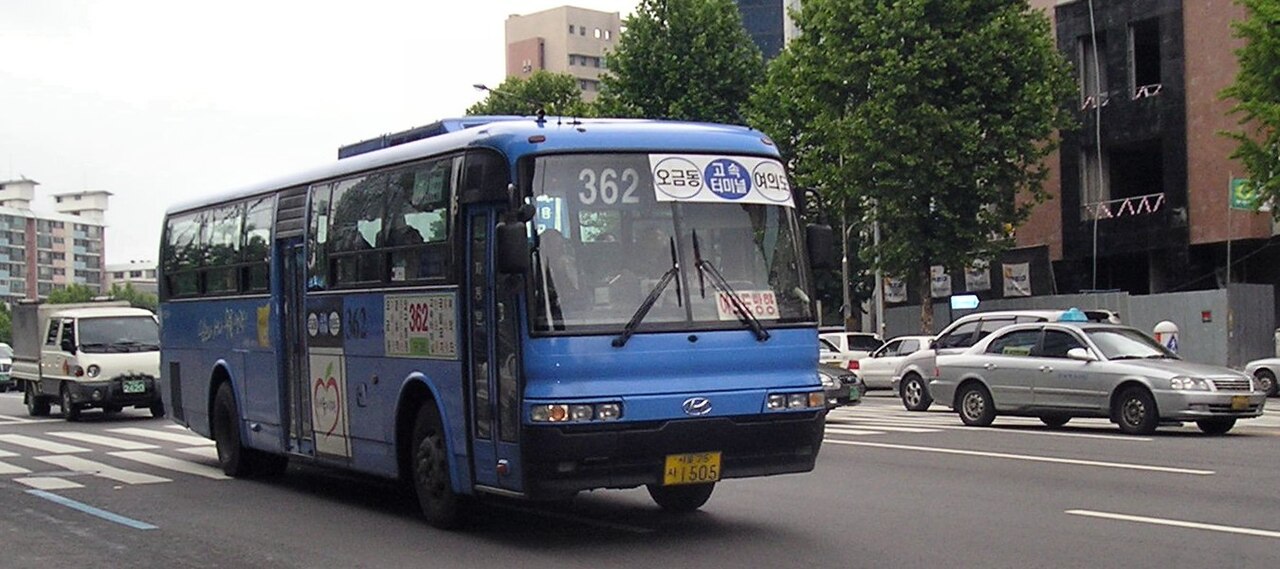
Long routes linking major districts across the city.
Short neighbourhood routes that connect you to the nearest subway station.
Loops around the city centre and tourist areas (e.g. around Namsan).
Fast buses to satellite cities (Bundang, Ilsan). Higher fare.
Taxis & Kakao T
Taxis are affordable and plentiful. The one thing to install is Kakao T — over 90% of Seoul taxis run on it, it shows an estimated fare before you confirm, and it removes any language or route-padding worry.
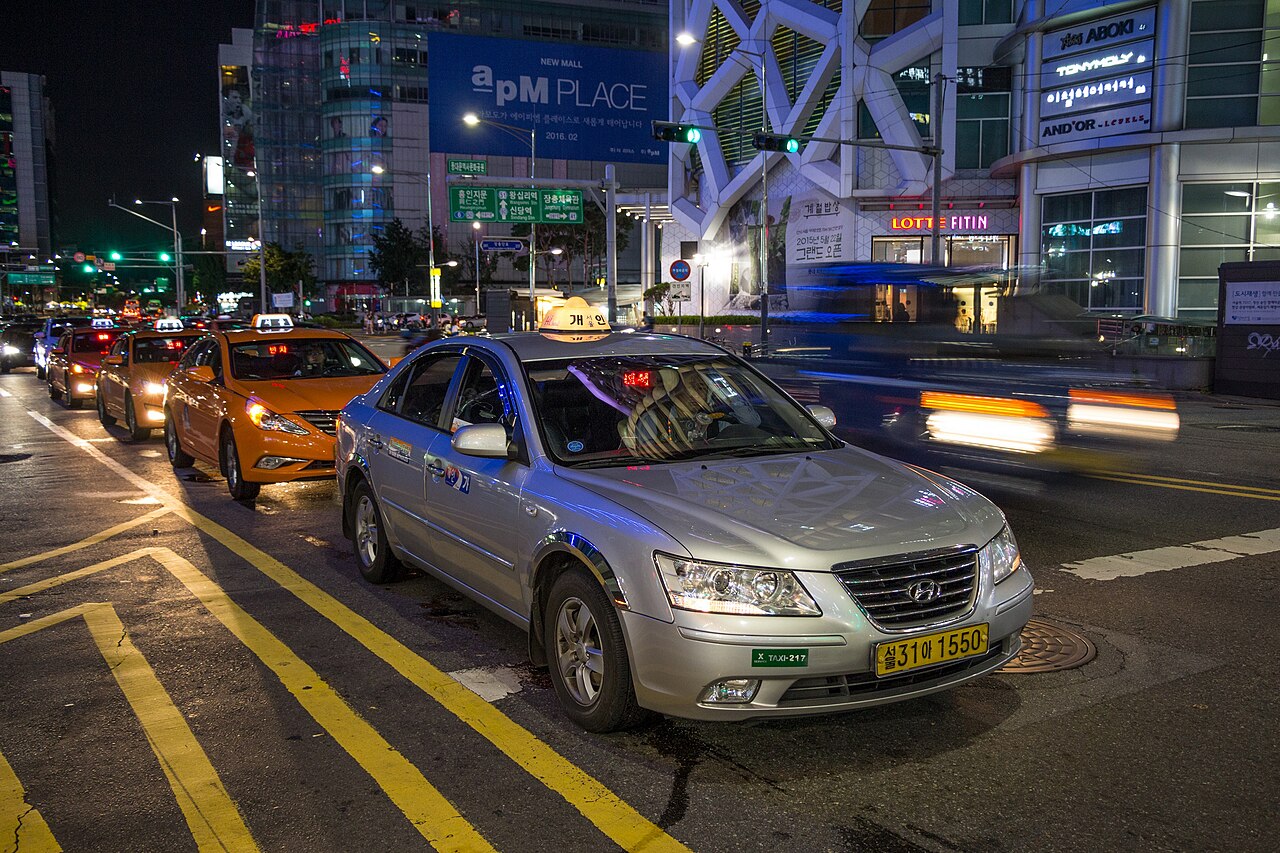
The standard orange/silver taxi. Metered; late-night surcharge up to 40% (~23:00–02:00).
Black with a gold stripe. Pricier, roomier, and NO late-night surcharge — good for late trips.
Black or orange, marked 'International'. Drivers speak English/Chinese/Japanese; can be pre-booked.
ⓘ Pay by T-money or card in most taxis. Have your destination in Korean (the map app shows it) to make pickup and drop-off smooth.
City to city: KTX vs SRT
Two high-speed rail operators cover the country. They're similar to ride — the difference is the departure station and a few rules.
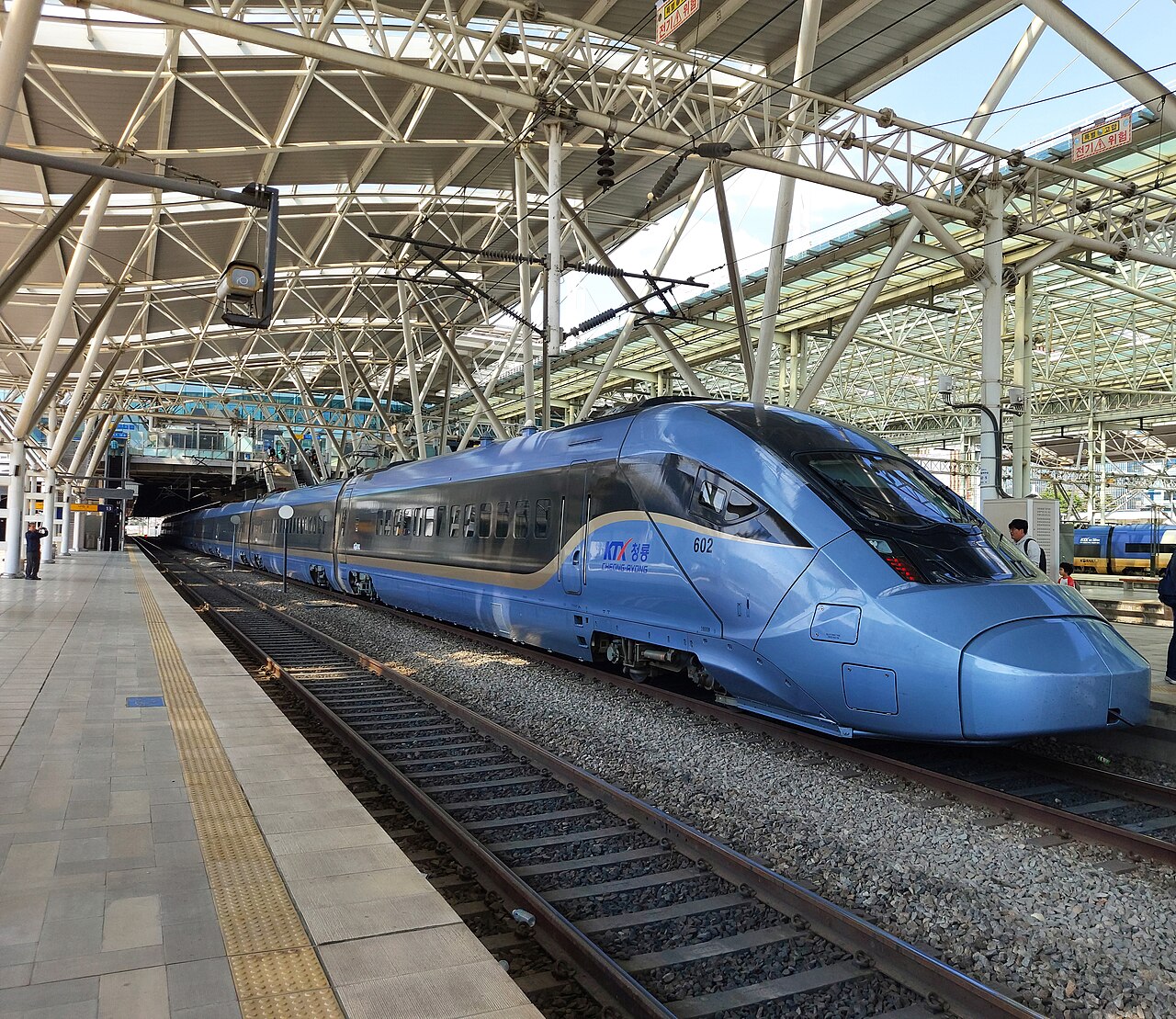
| KTX | SRT | |
|---|---|---|
| Operator | Korail (since 2004) | SR Corp (since 2016) |
| Departs Seoul from | Seoul Station (central) | Suseo Station (south-east) |
| Network | Widest — Busan, Gyeongju, Gwangju, Gangneung, Yeosu… | Busan, Mokpo lines |
| Price | Standard | ~10% cheaper |
| Book with | Korail Talk app / letskorail.com | SRT site (clunky for foreign cards) |
⚠ Double-check WHICH station you depart from — arriving at Seoul Station for an SRT train (which leaves Suseo) is a classic, trip-ruining mistake. Book ahead for weekends and holidays.
ⓘ Some links here are partner links — if you book through them we may earn a small commission, at no extra cost to you. We only list services we'd point a friend to.
Install these before you go
The most complete map + transit + walking directions in Korea. English available.
Excellent alternative map with clear transit routing and bus arrival times.
Call taxis with an upfront fare estimate; also bikes, and more.
Official KTX booking app — reserve seats and show mobile tickets.
Mistakes that cost you time or money
It won't route transit or driving in Korea. Use Naver Map or KakaoMap instead.
Skip the exit tap and you lose the free transfer and may be overcharged. Always tap both ways.
KTX leaves Seoul Station; SRT leaves Suseo. Confirm your departure station before you go.
Seoul subway is packed ~08:00–09:30 and ~18:00–19:30. Avoid big luggage at those times.
Buses don't give change well and some don't take cash. A charged T-money card avoids all of it.
Getting-around FAQ
Do I really need a T-money card?
It's the easiest option by far — one tap for subway, bus and most taxis, plus free transfers. Buy and charge it at any convenience store.
Which map app should I use?
Naver Map or KakaoMap. Google Maps can't provide transit or driving directions inside Korea due to data-export rules.
How do transfers work?
With T-money, transfers between subway and bus (or bus and bus) are free within 30 minutes — as long as you tap in and out every time.
How do I take a taxi without speaking Korean?
Use Kakao T: set your destination in the app, see the fare estimate, and the driver gets the route. Pay by card or T-money.
KTX or SRT to Busan?
Both are fast (~2h40). KTX leaves central Seoul Station and is easiest to book (Korail Talk app); SRT is a bit cheaper but leaves Suseo Station and is harder to book with a foreign card.
Is the subway safe late at night?
Yes, Korea's transit is very safe. Note the subway stops running around midnight — after that, use a taxi (Kakao T) or a night (N) bus.
Sources officielles
Les informations pratiques sont vérifiées auprès de sources officielles avec une date de vérification. Les prix, horaires et règles de visa évoluent — confirmez toujours auprès de la source officielle indiquée avant de voyager.